

In today’s digital world, mobile applications are not just a convenience — they are a necessity. From booking rides and ordering food to banking, learning and entertainment, apps drive many of our daily interactions. For those who wish to build a meaningful career in technology, taking a mobile app development course can open doors to creativity, problem-solving, and stable employment. This blog explores what aspiring developers should know when choosing such a course, what skills they will gain, and how a well-structured curriculum can help them step confidently into the app development industry.
Mobile phones and tablets have become deeply embedded in everyday life. As more people rely on apps for work, communication, shopping and entertainment, demand for skilled developers continues to rise. A course in mobile app development is not just about learning how to code. It offers a chance to master tools and frameworks that enable developers to build apps for Android, iOS, and cross-platform environments. For many learners, this pathway is both pragmatic and creative.
Choosing a dedicated course provides structure and clarity compared with learning piecemeal through online tutorials. A course prepares you from the basics — understanding development environments — to more advanced skills like cross-platform frameworks, user interface design and app publishing. This holistic approach helps learners build confidence and competence. In the long term, being able to build and deliver professional-quality apps may lead to secure employment, freelance opportunities or even launching your own app-based business.
In addition, mobile app development skills remain relevant as the tech industry evolves. New tools, languages and frameworks keep emerging, and a good course will help you stay updated with the latest trends. If you enjoy logical thinking, problem solving, user experience design and seeing your work come alive in the form of functioning apps, then investing in learning mobile app development can be deeply rewarding.
When evaluating a mobile app development course, there are some key qualities that make the difference between a good learning experience and a great one. First, the course should offer training on mainstream development environments and frameworks. For Android apps this means familiarity with a development environment like Android Studio, and for iOS, knowledge of Xcode or equivalent tools. Cross-platform frameworks such as Flutter, React Native or Ionic add considerable value by enabling developers to reach both Android and iOS users from the same code base.
Second, a robust course should teach fundamentals of design and development. That includes understanding how to design user-friendly interfaces, how to manage data and APIs, and how to test and debug apps. Learning only the basics of a language or a tool without exposure to real-world practices often leaves developers unprepared for actual projects. A complete curriculum ensures you learn not just coding, but project workflow, environment setup, platform-specific constraints, and deployment practices.
Third, it is beneficial if the course offers hands-on practice through real world projects. This experience builds confidence and allows you to see how parts of development fit together. A project-driven approach helps you move from theory to application, and improves your readiness for professional work. Finally, courses that provide guidance on career paths, potential job roles, or support for placements can help turn learning into a stable career.
A well designed mobile app development course typically begins with foundational skills and gradually builds up to advanced techniques. For instance, the learning path might begin with installation and setup of development environments. On Android side that would include learning how to use Android Studio, writing code in languages like Java or Kotlin, and understanding basic app architecture. For iOS that could mean setting up Xcode and learning Swift or Objective-C.
As learners progress, the course might introduce cross-platform frameworks such as Flutter, React Native or Ionic, which allow writing apps that run on both Android and iOS. Learning these frameworks helps developers build apps faster, maintain code more easily, and reach a wider audience. Alongside coding, the course should cover user interface design, user experience basics, app navigation patterns, data handling and API integration. Testing, debugging and preparing apps for deployment are critical skills too.
Some courses also include project work where students build sample apps from scratch. Projects could involve simple apps like to-do lists or calculators and gradually evolve into more complex applications that interact with online services or databases. By the time students complete the course they not only understand how apps are built, but also how they are structured and maintained. This end-to-end exposure makes them more job ready and capable of contributing to real development teams or even starting their own ventures.
Many developers begin with free online tutorials or do-it-yourself experiments. While such resources are valuable, they often lack structure, consistency and practical exposure. A dedicated mobile app development course offers a guided journey with clearly defined milestones rather than scattered lessons. This structured learning ensures no essential topic is skipped.
Courses also provide mentorship and support from experienced instructors. When you run into a tricky bug or struggle to understand a concept, having an instructor to explain, guide and review your work is invaluable. This support helps avoid frustration and ensures you build a solid foundation. In addition, courses often encourage collaboration among students. Working with peers exposes you to different ways of thinking, enhances problem-solving skills and fosters teamwork — all important in professional development environments.
Furthermore, courses tend to offer a curated curriculum that balances theory with practice. While tutorials may teach you to build a simple app, a course will guide you through building maintainable, scalable and robust applications. It will teach you about design principles, modular code architecture, debugging and deployment. This kind of training equips you with capabilities employers look for rather than just superficial knowledge. In many cases, a course also adds value by offering career guidance, portfolio building, and sometimes placement support — making the transition from learning to employment smoother.
If you are considering enrolling in a mobile app development course, it helps to start with some basic preparation. You should have a fundamental understanding of computer operations. Familiarity with web technologies such as HTML and CSS can be beneficial, especially if the course also touches on hybrid apps or cross-platform frameworks that use web-based components. A willingness to learn and practice regularly is more important than prior expertise. Mobile app development involves logic, structure, patience and attention to detail, so mindset matters a lot.
When starting the course, be prepared to spend time learning the basics carefully. Start by familiarising yourself with the development environment, understanding how coding works and practising simple programs. As you grow comfortable, you can take on more complex tasks, gradually building apps from scratch. Do not rush. Learning to build quality apps takes time and consistent practice. Be ready to experiment, debug, iterate and learn from errors. Mistakes are part of learning.
Also, try to embrace a habit of continuous learning. The technology landscape evolves rapidly — new frameworks, new languages and new platform requirements emerge frequently. A commitment to staying updated, learning new tools, and adapting to changes will help you remain relevant in your career. Finally, approach the course with openness, curiosity and a willingness to build real world projects rather than just toy applications.
Completing a comprehensive mobile app development course should leave you equipped with the skills to build fully functional apps for major platforms. You become capable of designing user interfaces, writing clean and maintainable code, managing data and APIs, testing and debugging, and preparing apps for deployment. Beyond technical skills, you also gain problem-solving ability, understanding of best practices, and a mindset oriented toward continual learning.
With these skills, you can aim for various career paths. You might join a software development team at a company, work as a freelance app developer, or start your own app-based startup. Even if you are new to coding, a well-designed course gives a pathway to build a portfolio of real apps you have created, which helps in job interviews or freelance pitches. Some courses may also offer placement support or guidance to connect with employers or clients. With consistent effort and learning, mobile app development can open doors to long-term career stability and growth.
In a rapidly evolving field like mobile app development, staying up to date is crucial. Tools and frameworks change, operating system requirements evolve and user expectations shift. A high-quality course reflects this reality. It updates its content to cover latest frameworks, teaches current best practices in design and code, and encourages developers to learn modern techniques.
An outdated curriculum might teach languages or tools that are no longer widely used or neglect important practices such as responsive design, security, privacy, performance optimisation and cross-platform compatibility. That kind of gap can leave learners ill-prepared for real-world work. On the other hand, a well-structured course with updated modules gives students a competitive advantage. It prepares them to face industry demands confidently and ensures they learn tools that matter.
Continuous support and feedback also matter. A course that offers instructor feedback, peer review, code reviews and project critique provides a richer learning environment. This helps learners understand mistakes, learn best practices, and improve continuously — something self-learning rarely offers.
Learning mobile app development is not just about personal career growth. It also gives you the ability to build applications that serve real users — in communities, businesses or everyday life. Developers have the power to turn ideas into digital tools that solve problems, connect people, and add convenience. Whether you build a simple utility app, an educational tool, a local service app or a startup-scale project — your work can make a meaningful difference.
With a robust course, you learn how to build apps that are not just functional but also user-friendly, performance-optimised, and scalable. That ensures your creations are reliable and useful. As you grow as a developer, you can take on more ambitious projects or collaborate with others. Over time, your role could evolve beyond coding to design, project management or entrepreneurship. Your journey as a developer can become a journey of building solutions, empowering people and contributing to the digital world.

From Student to Developer: The Power of Programming Training in Gaighata

Career Opportunities After Completing a Graphic Design Course in Kalasima

From Student to Digital Marketing Professional: How Digital Marketing Courses in Bongaon Can Transform Your Future

How Learning Python in Nahata Can Open Doors to Global Tech Opportunities

Why Students in Nahata Are Choosing Graphic Design as a Career in 2026
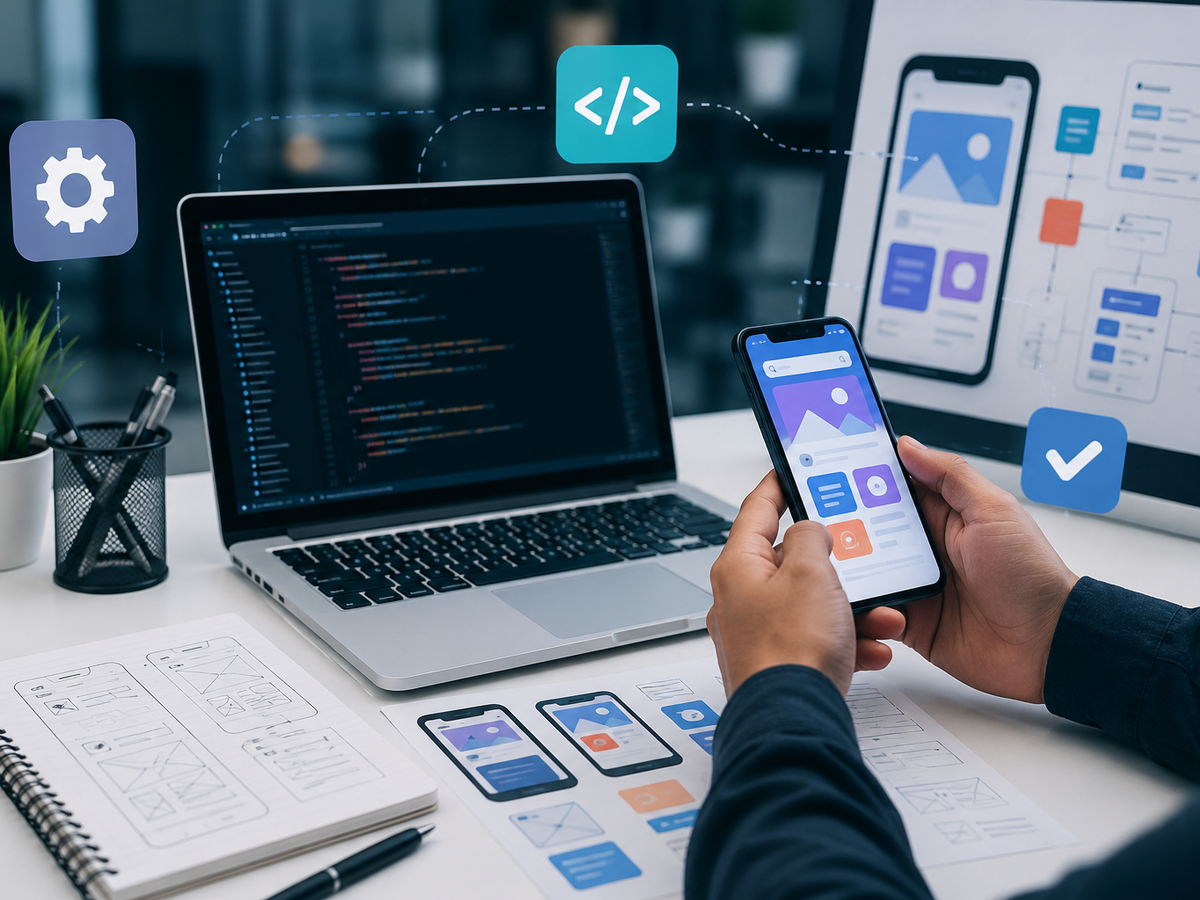
How a Mobile App Development Course in Kalasima Prepares You for the IT Industry

Graphic Designer Course in Helencha to Start a Successful Graphic Design Career

How Students Can Prepare for Job Opportunities for Graphic Designer in Kalupur

Programming Careers in Kolkata: What Happens After You Learn to Code?

Top Career Growth Opportunities for Digital Marketing Professionals in Gaighata

Career Opportunities After Learning Ionic App Design in Gopalnagar

Career Growth Potential Through IT Job Opportunities in Thakurnagar

Faculties from Mobile App Development Institute and Web Designing Institute work hand in hand as these are some of the essential requisites that a digital marketer needs to understand.
Sources