
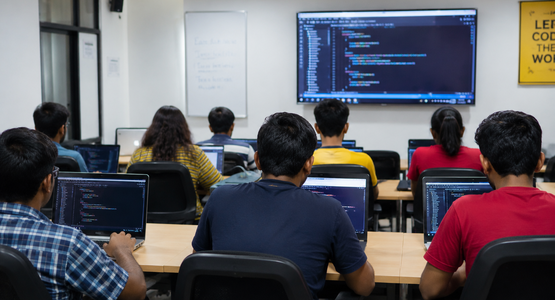
Technology is changing the way people learn, work and build careers. Just a few years ago, many students believed that high paying technology jobs were available only in major cities or foreign countries. Today, the internet has changed everything. A student living in Nahata can learn the same programming skills as someone studying in London, Singapore or New York. This shift has created exciting opportunities for young learners who want to build a future in software development, artificial intelligence, data science and digital innovation.
Among all programming languages available today, Python has become one of the most popular and widely used. Companies across the world use Python to develop websites, create software applications, analyse data, automate business processes and build advanced artificial intelligence systems. Because of its simplicity and versatility, Python has become the preferred choice for beginners as well as experienced developers.
Many students often ask a common question. Is learning Python worth it in today's competitive job market? The answer is yes. Python continues to be one of the most demanded programming languages globally. Organisations ranging from small businesses to international technology companies actively seek professionals who understand Python programming and can solve real world problems using code.
For students in Nahata, this presents a valuable opportunity. Learning Python is no longer limited by geography. With proper guidance, practical projects and consistent learning, students can gain skills that connect them to opportunities beyond their local area. Whether someone dreams of becoming a software developer, data analyst, machine learning engineer, automation specialist or entrepreneur, Python provides a strong foundation for future growth.
The growing demand for coding skills has also increased interest in Python code development courses. Students are searching for practical learning experiences that help them understand not only the language itself but also how it is used in real projects. This focus on practical application is becoming increasingly important because employers now value problem solving skills and project experience alongside theoretical knowledge.
The technology sector evolves quickly, but some skills remain consistently valuable because they solve real business challenges. Python has earned its position as one of the most important programming languages because it can be used across multiple industries and applications.
Unlike many traditional programming languages that can seem difficult for beginners, Python uses straightforward syntax that is easier to understand. This allows students to focus on learning programming concepts rather than struggling with complicated rules. As a result, many educational institutions, software companies and technology professionals recommend Python as a starting point for learning coding.
One reason behind Python's popularity is its flexibility. A person who learns Python can work on website development, software applications, automation tools, business systems, artificial intelligence solutions and data analysis projects. This broad range of applications creates opportunities in different industries rather than limiting learners to a single career path.
Global businesses increasingly use Python because it helps teams develop solutions efficiently. Companies need systems that improve productivity, automate repetitive tasks and process large amounts of information. Python supports these objectives while remaining accessible to developers of varying experience levels.
The rise of artificial intelligence has further increased the importance of Python programming skills. Many AI frameworks, machine learning tools and data science platforms are built around Python. As organisations continue investing in AI technologies, demand for Python professionals is expected to remain strong.
Students in Nahata who begin learning Python today are preparing for a future where digital skills play an important role across nearly every industry. From healthcare and finance to education and manufacturing, organisations depend on technology to improve operations and create new services. Python often sits at the centre of these innovations.
Another advantage is that Python supports both employment and entrepreneurship. Some learners use their coding skills to secure jobs, while others create their own digital products, software solutions or technology startups. This flexibility allows individuals to shape careers based on their interests and goals.
The modern job market is no longer restricted by location. Remote work, online collaboration and digital communication have transformed the employment landscape. Skilled professionals can now contribute to projects for organisations located anywhere in the world.
This shift creates significant opportunities for students who develop strong Python programming skills. Employers increasingly evaluate candidates based on knowledge, project experience and problem solving ability rather than physical location alone. Someone living in Nahata can work with clients, teams and organisations across different countries if they possess the right skills.
Python is commonly used in international technology projects. Businesses need developers who can build applications, manage databases, automate workflows and create intelligent systems. These requirements exist in companies of all sizes, creating a wide range of opportunities for skilled professionals.
Freelancing has also become a popular career option for many programmers. Digital platforms allow developers to offer services globally. Python developers often work on software development, website functionality, automation solutions, data processing systems and custom business applications. This enables learners to gain experience while building professional portfolios.
Another important benefit of learning Python is access to global learning communities. Developers from different countries share knowledge, collaborate on projects and contribute to open source software. Students who engage with these communities gain exposure to international standards and modern development practices.
The ability to participate in worldwide technology ecosystems helps learners expand their understanding beyond classroom concepts. They begin solving practical problems, exploring emerging technologies and understanding how software development works in professional environments.
As technology becomes increasingly interconnected, employers value individuals who can adapt, learn continuously and work with diverse teams. Python education supports these qualities because it encourages logical thinking, creativity and structured problem solving. These skills remain valuable regardless of industry trends or technological changes.
Students who start learning Python in Nahata today may eventually contribute to projects used by people across different countries. They may develop applications, analyse business data, create automation systems or support artificial intelligence initiatives. The possibilities continue expanding as technology advances.
Every year, new technologies emerge and reshape industries. Despite these changes, Python continues to strengthen its position within the technology sector. Experts consistently rank Python among the most popular and widely used programming languages worldwide.
The reason is simple. Python adapts to new technological developments while remaining accessible to learners. Whether organisations are exploring artificial intelligence, cloud computing, cybersecurity, data analytics or software automation, Python often plays a significant role.
Starting early provides several advantages. Learning programming requires time, practice and consistency. Students who begin developing coding skills during their educational years often gain confidence before entering the professional job market. They have more opportunities to build projects, experiment with new ideas and strengthen their technical knowledge.
Python also teaches valuable thinking skills. Programming encourages learners to break complex problems into smaller parts and create structured solutions. These abilities extend beyond technology careers and support success in many professional environments.
As businesses continue their digital transformation efforts, demand for coding knowledge is expected to remain strong. Organisations need individuals who understand technology and can contribute to digital innovation. Python provides an accessible entry point into this evolving world.
Students interested in software development, artificial intelligence, machine learning, automation, web development and data science often discover that Python serves as a foundation for further specialisation. Once learners understand core programming principles, they can explore advanced topics and career paths with greater confidence.
For young people in Nahata, learning Python represents more than acquiring a technical skill. It is an opportunity to participate in a global industry that values creativity, innovation and continuous learning. Technology has reduced geographical barriers, allowing talented individuals from smaller communities to compete and succeed on larger stages.
The future belongs to people who can understand and work with technology. Python remains one of the most effective ways to begin that journey. Students who invest time in learning, practising and applying Python concepts today may discover opportunities tomorrow that extend far beyond what they initially imagined.
One of the biggest advantages of learning Python is that students can move beyond theory and begin creating practical projects relatively quickly. Many beginners worry that programming is too complex or requires advanced mathematical knowledge before they can start building something useful. In reality, Python allows learners to see results early in their journey, which helps maintain motivation and encourages continuous improvement.
Practical experience is becoming increasingly important in the technology industry. Employers often look for individuals who can demonstrate their ability to apply knowledge in real situations. This is why many aspiring developers spend time creating projects that showcase their understanding of programming concepts. These projects might include simple applications, data analysis tools, automation scripts or interactive web solutions.
For students in Nahata, working on Python projects provides exposure to the same development processes used by professionals around the world. Each project introduces new challenges and encourages learners to think critically. When students encounter errors, they learn how to troubleshoot problems, analyse situations and develop effective solutions. These experiences strengthen confidence and build valuable technical skills.
Python also supports collaboration. Many development projects involve multiple contributors working together to create a final product. Learning how to read code written by others, contribute improvements and communicate technical ideas clearly helps prepare students for professional environments. These experiences can be just as valuable as learning the language itself.
Another important benefit is that Python encourages experimentation. Students can explore different areas of technology without needing to learn an entirely new language each time. Someone interested in website development can use Python frameworks designed for web applications. Another learner may focus on data analysis, while someone else might explore artificial intelligence or automation. This flexibility allows students to discover which areas of technology align with their interests and career ambitions.
The process of creating projects also helps learners develop a portfolio of work. As technology employers increasingly value demonstrated ability, a collection of completed projects can provide evidence of practical skills. This becomes especially useful when applying for internships, entry level positions or freelance opportunities.
Learning Python is not simply about writing code. It is about understanding how technology solves problems. Every successful project begins with identifying a challenge and designing a solution. Students who develop this mindset gain an advantage because businesses are constantly seeking people who can think creatively and improve processes through technology.
Many students choose educational paths based on current trends without considering long term opportunities. While some technologies rise and fall in popularity, Python has shown remarkable growth over many years. Its continued expansion across industries makes it one of the most valuable skills for future career development.
The demand for technology professionals continues to increase as businesses invest in digital systems. Organisations need developers, analysts, engineers and technology specialists who can support innovation and improve operational efficiency. Python contributes to many of these roles, making it a practical skill for long term career planning.
One factor driving Python's success is its widespread adoption across different sectors. Financial institutions use Python for data analysis and reporting. Healthcare organisations use it to process information and support research. Educational platforms use it to build learning systems. Manufacturing companies use it to automate processes and improve productivity. Technology firms use it to create applications and services used by millions of people.
This broad adoption means that learners are not limited to a single industry. As career goals evolve, Python skills remain valuable because they can be applied in many different professional settings. A student who begins with software development may later move into data science, automation or artificial intelligence without abandoning their programming foundation.
The rise of remote work has further strengthened opportunities for skilled developers. Companies increasingly hire talent based on expertise rather than location. This creates opportunities for learners in Nahata to compete in a wider employment market. Strong technical skills combined with communication and problem solving abilities can help individuals access opportunities that were once difficult to reach.
Python also supports continuous learning. The technology industry evolves rapidly, and professionals must adapt to new tools and methodologies. Because Python is used in so many emerging technologies, learners often find it easier to expand their knowledge into related fields. This ability to adapt becomes increasingly important as industries undergo digital transformation.
Students who begin learning Python today are investing in a skill that continues to create opportunities across the global economy. While no technology can guarantee success, developing a strong foundation in programming provides access to pathways that may otherwise remain unavailable.
The global technology sector influences nearly every aspect of modern life. From online shopping and digital banking to healthcare systems and entertainment platforms, software plays a central role in everyday experiences. Behind many of these systems are developers and technology professionals who use programming languages like Python to create and maintain digital solutions.
Understanding this global landscape helps students recognise the value of coding skills. Technology is no longer confined to specialised companies. Businesses in every sector depend on software, data and digital infrastructure to remain competitive. As a result, demand for programming expertise continues to expand.
Python has become a key part of this transformation because it enables developers to create solutions efficiently. It supports rapid development, encourages clear coding practices and offers access to extensive libraries that simplify complex tasks. These advantages make Python attractive to organisations seeking practical and scalable technology solutions.
Artificial intelligence represents one of the most significant developments in recent years. Many AI applications, including machine learning systems, predictive models and intelligent automation tools, are built using Python. As businesses continue exploring AI capabilities, demand for professionals with Python knowledge is expected to grow further.
Data has also become a valuable resource for organisations worldwide. Companies collect information to understand customer behaviour, improve services and make informed decisions. Python plays an important role in analysing this data and transforming it into useful insights. Students who understand Python gain access to opportunities within this expanding field.
Cybersecurity, cloud computing and automation are additional areas where Python contributes significantly. These fields continue attracting investment as organisations seek to protect digital assets, improve efficiency and support innovation. Learners who build strong programming foundations position themselves to explore these specialised areas as their interests develop.
For students in Nahata, understanding the global importance of Python can provide motivation and direction. Learning to code is not simply an academic exercise. It is participation in a worldwide movement driven by innovation, creativity and problem solving. The skills developed through Python education have applications that extend far beyond local boundaries.
Learning Python in Nahata can open doors to opportunities that extend across industries, countries and technologies. The digital economy continues expanding, and organisations increasingly need individuals who can understand programming, solve problems and contribute to technological progress. Python remains one of the most accessible and valuable languages for beginners while also supporting advanced applications in software development, artificial intelligence, automation and data science.
Students who invest time in learning Python gain more than technical knowledge. They develop analytical thinking, creativity and the ability to approach challenges with confidence. These qualities support success in many career paths and help learners adapt to a rapidly changing world.
The journey from beginner to skilled programmer does not happen overnight. It requires curiosity, practice and a willingness to keep learning. However, the opportunities created by these efforts can be significant. Technology has reduced geographical barriers, making it possible for talented individuals from communities such as Nahata to participate in global innovation and digital transformation.
As industries continue embracing technology, the value of coding skills is likely to remain strong. Python stands at the centre of many modern developments, making it an excellent starting point for students who want to build meaningful careers in the technology sector. Those who begin learning today may discover that a simple decision to study Python becomes the first step toward a future filled with exciting possibilities, professional growth and global opportunities.
At V1 Academy, we help aspiring learners build practical coding skills through our Python Code Development Courses in Nahata, designed to strengthen programming knowledge through hands on learning and real world applications. We focus on creating a supportive learning environment where students can develop confidence, improve problem solving abilities and prepare for opportunities in today's technology driven world.

From Student to Developer: The Power of Programming Training in Gaighata

Career Opportunities After Completing a Graphic Design Course in Kalasima

From Student to Digital Marketing Professional: How Digital Marketing Courses in Bongaon Can Transform Your Future

Why Students in Nahata Are Choosing Graphic Design as a Career in 2026

How a Mobile App Development Course in Kalasima Prepares You for the IT Industry

Graphic Designer Course in Helencha to Start a Successful Graphic Design Career

How Students Can Prepare for Job Opportunities for Graphic Designer in Kalupur

Programming Careers in Kolkata: What Happens After You Learn to Code?

Top Career Growth Opportunities for Digital Marketing Professionals in Gaighata

Career Opportunities After Learning Ionic App Design in Gopalnagar

Career Growth Potential Through IT Job Opportunities in Thakurnagar

Why Learning SEO Can Open Doors to Digital Marketing Jobs in Dogachia

Faculties from Mobile App Development Institute and Web Designing Institute work hand in hand as these are some of the essential requisites that a digital marketer needs to understand.
Sources