

In today’s world, a mobile application can often make or break a business idea. Smartphones are everywhere, people expect seamless experiences, and apps have become the primary way we interact with digital services. If you are thinking: “Can I build an app from scratch?”, or “Is there a structured way to learn how to code and build mobile apps?”, then a well-designed mobile app development course can be the right first step. In this post I will walk you through what a modern mobile app development course can offer, what you should look out for, and how such a course can help you build practical, real-world skills.
Smartphones have transformed how we live, work and interact. With growing smartphone adoption worldwide, demand for mobile applications is surging. Businesses across sectors — from retail to health, education to entertainment — want apps that deliver smooth and reliable user experiences. As a result, competent app developers are in demand. Learning to build mobile apps gives you the power to create tools and services for a global audience, solve real-life problems, or even build a career working with clients or startups. A structured mobile app development course can guide you step by step from basic coding to building full-fledged apps.
Such courses become especially valuable when they help learners avoid common pitfalls — like getting overwhelmed by scattered tutorials or struggling to put theory into practical code. With guidance from experienced instructors, beginners can progress steadily, building confidence and practical competence. A good course does not only teach coding but also instils good practices in design, testing, optimisation and real-world deployment.
A robust mobile app development course should start with the fundamentals. For instance, it might expect learners to have basic computer literacy and a familiarity with web basics such as HTML, CSS or JavaScript. From there, the course should guide you to choose which platform you want to master: Android or iOS. Each platform uses different technologies; for Android, you may learn Java or Kotlin, while for iOS you may explore either Swift or Objective-C. The course should also introduce development environments and frameworks such as Android Studio, Eclipse, Xcode, or cross-platform tools when we aim to build hybrid or progressive web apps.
Beyond coding, a solid curriculum will stress learning by doing. That means hands-on practice, working on real or simulated projects, writing clean and maintainable code, documenting your work, and regularly iterating and improving. Over time, you might progress from small experiments to building complete native apps or progressive web apps. A fully structured course may span several months, giving learners enough time to build proficiency and receive certification upon completion.
The course should also inform you about modern requirements such as app security, responsive design, performance optimisations and, if relevant, support for progressive web apps (PWAs). Ideally, it will prepare you not just to build a functional app but to build one that meets user expectations and industry standards.
Whether you learn through a course or self-study, it is important to follow recognised best practices. A good app begins with clear planning: defining the purpose of the app, understanding who will use it, and researching existing apps to understand what works and what does not. Without such research, even a technically perfect app may fail due to poor user experience or lack of demand.
Once planning is done, selecting the right development approach is critical. Native apps built for Android or iOS give access to full device capabilities and often deliver superior performance. Hybrid or cross-platform solutions can reduce development time and reach more devices, but they may bring trade-offs. The choice depends on your target users, performance needs and long-term goals.
Another essential principle is to prioritise user experience and simplicity. Apps that are intuitive, responsive and easy to navigate usually win user trust and retention. Overly complicated interfaces or features rarely appeal to general users. Design decisions should focus on clarity and smooth user journeys rather than flashy but confusing interactions.
Security and data privacy must never be afterthoughts. Many apps deal with personal data, payment information or sensitive user inputs; ensuring strong security practices helps build trust and prevents vulnerabilities. Testing is equally vital: apps must be tested across different devices, screen sizes and usage environments. Continuous testing and debugging during development reduces the risk of bugs or crashes after launch.
Finally, once the app is launched, planning for updates and maintenance is important. App stores evolve, device capabilities change, and user expectations shift. Regular updates, bug fixes and performance improvements will keep the app relevant and functional for a long time.
Trying to learn app development alone through videos or random tutorials can be confusing. Many beginners start with high hopes but end up stuck without guidance. A structured mobile app development course offers clarity.
In a structured environment, you learn step by step. First you build foundational knowledge, then you write your first lines of code, then you practise building small modules and gradually progress to more complex projects. Expert tutor support helps when you get stuck. You get feedback on what you build, insights into best practices, and a roadmap that keeps you moving forward.
Many such courses offer practical exposure: real-life projects, collaboration with peers, code reviews, and opportunities to build full applications by the end of the course. This bridges the gap between theoretical knowledge and real-world demands.
Moreover, certification upon completion can add credibility to your profile. It shows prospective employers or clients that you have undergone structured training, worked on practical assignments and demonstrated competence.
If you are considering enrolling in a mobile app development course, there are few important questions you should ask yourself and the course provider. First, what is the entry requirement? Do you need prior programming experience, or is the course designed for absolute beginners with basic computer skills? A good course should clarify this from the outset.
Second, which platforms and programming languages will you learn? Ask whether the course covers Android, iOS or both. Check which languages are taught — Java, Kotlin, Swift, Objective-C — and whether the course covers modern frameworks or hybrid approaches.
Third, what kind of practical work is involved? Courses that only offer theoretical lessons may leave you unprepared. Prefer courses that incorporate real coding exercises, project work, code documentation, debugging sessions and the chance to build a full app by the end.
Fourth, what happens after completion? Does the course provide any form of job support or possibility to work on real projects? Are there opportunities to connect with clients, freelancing, start-ups or experienced professionals? These outcomes matter if you intend to use your skills commercially.
Finally, consider the pace and duration of the course. Learning app development properly takes time. An intensive but realistic schedule — perhaps daily lessons combined with practical work — helps ensure you absorb and practice what you learn rather than rushing through.
A well structured mobile app development course is valuable for a wide range of people. Web developers who already know HTML, CSS and basic scripting or JavaScript may benefit from expanding their skills to mobile platforms. People with no programming background but good interest in technology and logic can also start from scratch, provided the course is beginner friendly and offers foundational learning.
Aspiring entrepreneurs who have business ideas can learn to build their own apps without relying on external developers. Freelancers who want to offer app development services can build a strong skill base and portfolio. Even career switchers, perhaps from design or writing or marketing, can find a path into software development if they are willing to learn.
Finally, builders who want to understand how apps are built — to better communicate with developers or manage projects — can benefit from learning the development process and basic terminology.
Mobile app development is not a static skill; the world of technology moves fast. A good course will not only teach you current languages and tools but also sensitise you to current trends: cross-platform development, progressive web apps, agile development cycles, app store optimisation and evolving user expectations.
By learning with up-to-date tools and frameworks, you become better prepared to build functional, secure and compliant applications. You also learn best practices such as clean code, maintainability, documentation, version control, testing, UI/UX sensitivity, performance optimisation and data privacy considerations.
Moreover, if the course offers exposure to real projects (even internal or demo projects), you gain experience that resembles working in a professional environment. This builds confidence and offers a smoother transition into freelancing, employment or building your own app.
Learning mobile app development can open doors to many opportunities — from building your own app ideas to working professionally as a developer or freelancer. A structured, hands-on mobile app development course offers the best way to acquire these skills. It provides a clear roadmap, expert guidance, practical work and exposure to real-world development challenges.
If you are keen on entering the world of app development, take time to research courses carefully. Look for a course that supports beginners, covers relevant platforms and languages, emphasises practice and real-world application, and gives you a complete view of what it means to build and maintain a mobile application. This foundational investment in learning can pay off well, giving you both skills and confidence to build apps that matter.

From Student to Developer: The Power of Programming Training in Gaighata

Career Opportunities After Completing a Graphic Design Course in Kalasima

From Student to Digital Marketing Professional: How Digital Marketing Courses in Bongaon Can Transform Your Future

How Learning Python in Nahata Can Open Doors to Global Tech Opportunities

Why Students in Nahata Are Choosing Graphic Design as a Career in 2026
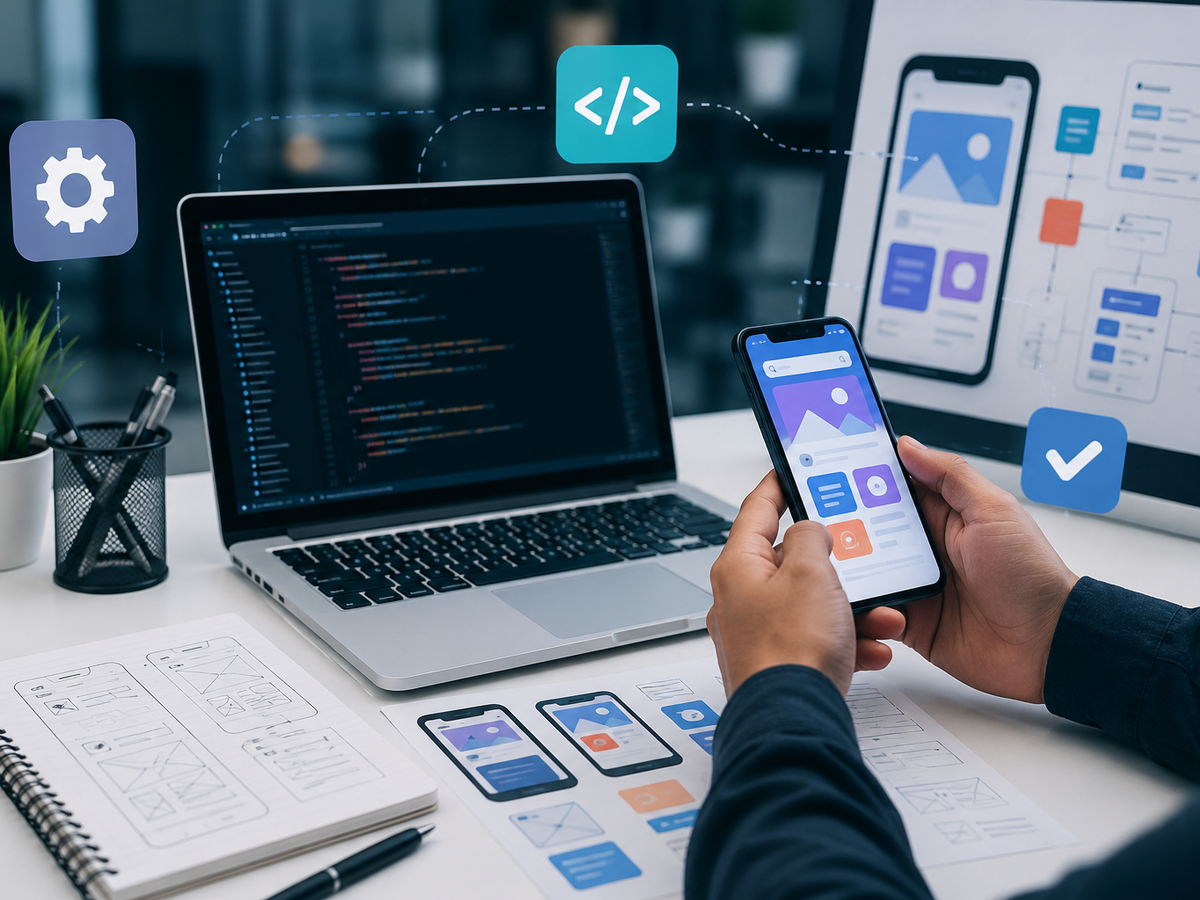
How a Mobile App Development Course in Kalasima Prepares You for the IT Industry

Graphic Designer Course in Helencha to Start a Successful Graphic Design Career

How Students Can Prepare for Job Opportunities for Graphic Designer in Kalupur

Programming Careers in Kolkata: What Happens After You Learn to Code?

Top Career Growth Opportunities for Digital Marketing Professionals in Gaighata

Career Opportunities After Learning Ionic App Design in Gopalnagar

Career Growth Potential Through IT Job Opportunities in Thakurnagar

Faculties from Mobile App Development Institute and Web Designing Institute work hand in hand as these are some of the essential requisites that a digital marketer needs to understand.
Sources